You sit through a long movie, a car ride or a dinner with friends. Then you stand up, and for the first few steps your hips feel like rusty hinges.
It usually eases after a minute of walking around. Still, it is a sign worth understanding, because there is a lot you can do about it.
The one takeaway Stiffness after sitting is common after 50 and is often linked to tight hip muscles or early osteoarthritis. It usually eases within minutes of moving. Getting up more often and stretching gently may help a lot.
Why sitting makes hips stiff
When you sit, the muscles at the front of your hips stay shortened for a long time. Your glutes switch off. Joint fluid, which keeps joints moving smoothly, circulates best when you move.
With osteoarthritis, the cartilage that cushions the joint slowly wears down. A classic sign is stiffness after rest that eases within about half an hour of moving. Many people call it "gelling."
Move little and often
The single best habit is to break up sitting every 30 to 60 minutes. Stand during TV ads, walk while you talk on the phone, or set a timer when you read or work.
When you stand, take a moment. Shift your weight side to side and march gently in place before you set off.
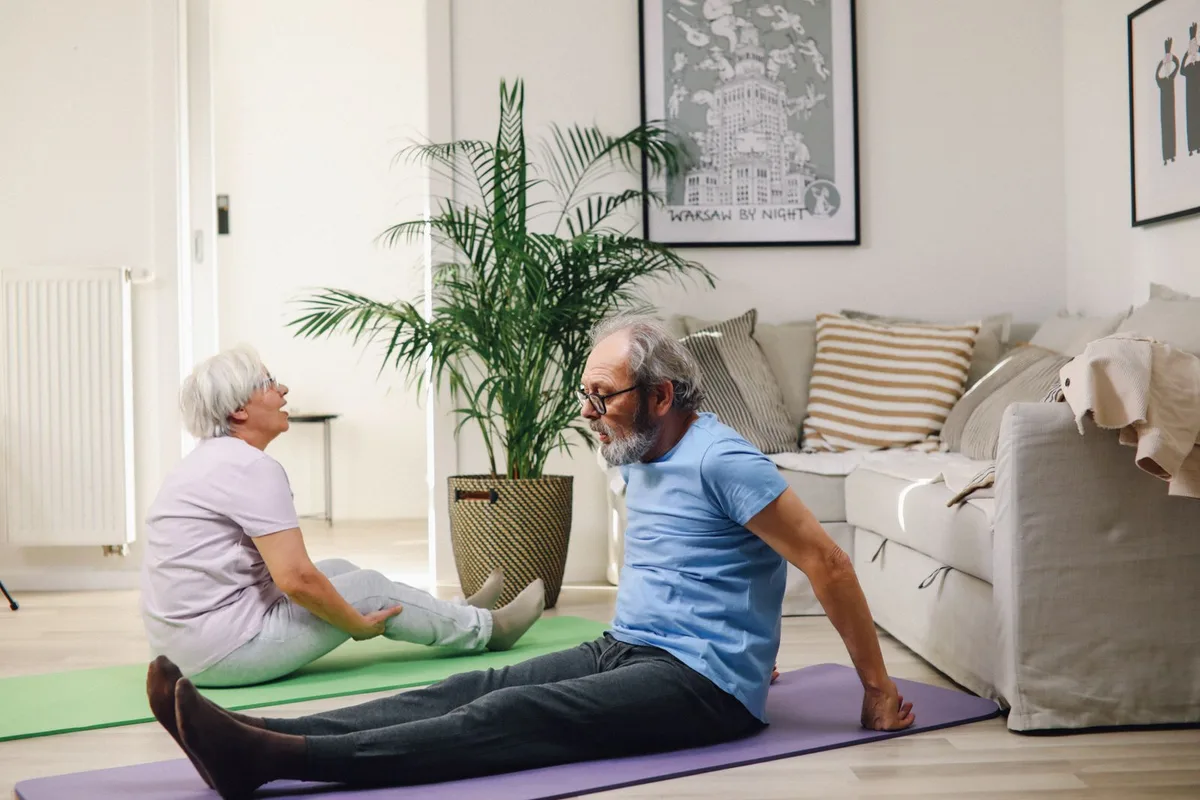
Gentle moves that may help
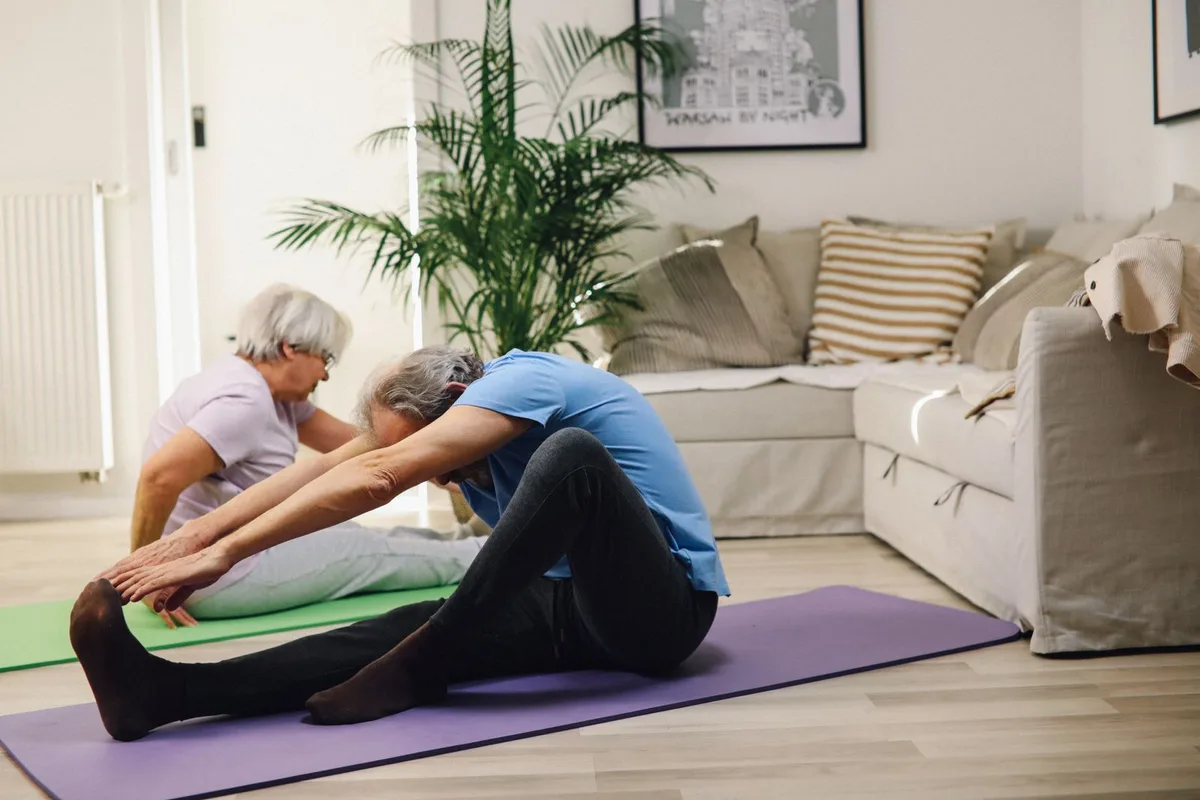
- Standing hip flexor stretch: hold a counter, step one foot back, tuck your hips under and hold for 20 to 30 seconds.
- Glute bridge: lie on your back with knees bent and lift your hips, then lower slowly.
- Seated figure four: sit tall, cross one ankle over the opposite knee and lean slightly forward.
- Side-lying leg lifts to strengthen the outer hip.
Move slowly and stay in a comfortable range. Mild stretch is good. Sharp pain is a signal to stop.
Regular walking, cycling or water exercise also keeps hips moving and the muscles around them strong.
Try a two-minute reset before getting up from a long sit: circle your ankles, straighten each knee and squeeze your glutes a few times.
When to talk to your doctor
See your doctor if stiffness lasts longer than about 30 minutes, keeps getting worse, or comes with pain in the groin, thigh or buttock that limits walking or sleep. Seek help urgently if you cannot bear weight after a fall, or if hip pain comes with fever, redness or swelling. Ask your doctor or pharmacist before taking pain medicine regularly.
Stiff hips are common, but they do not have to be your normal. A little movement, often, goes a long way.
Our articles share general information, not medical advice. Talk to your doctor before changing your diet, exercise or supplements. Lipozem Insider is a reader magazine, not the official Lipozem store.