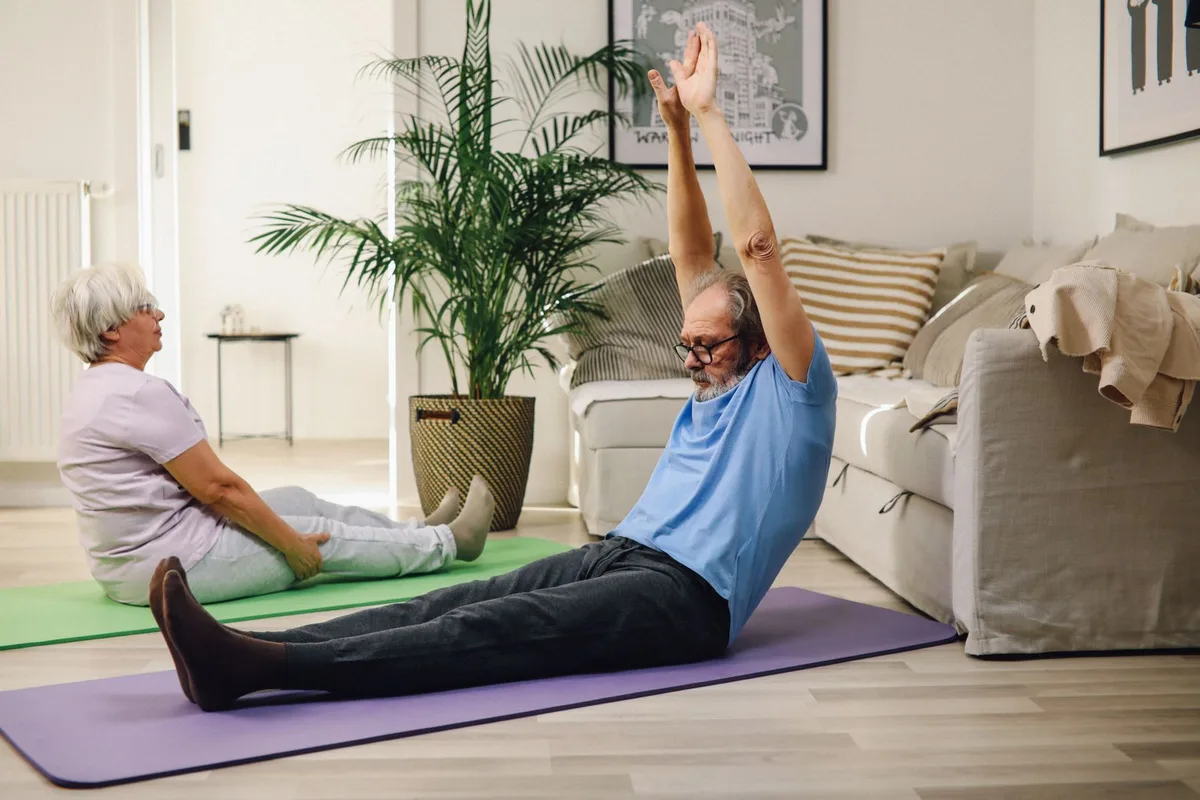
If your body feels like a rusty hinge for the first hour of the day, you are in good company. Morning stiffness is common, especially after 50, when joints and muscles take a little longer to warm up.
This week, you will give your body eight gentle minutes to wake up, every morning for seven days.
The one takeaway Gentle stretching after you wake may help ease stiffness and make the first steps of the day feel smoother. Slow, easy movement held without bouncing is the key, and a week is enough to notice how your body responds.
Why stretch in the morning
While you sleep, you barely move for hours. Muscles shorten slightly and joints feel tight. Easy movement warms the tissues and gets fluid moving around the joints. Regular stretching is linked to better flexibility and range of motion, which makes daily tasks like reaching and bending easier.
You are not training for anything. You are just helping your body get ready for the day.
The 7-day plan
Days 1 to 3
Start in bed. Pull one knee gently toward your chest, hold for 15 to 20 seconds, then switch. Point and flex your feet ten times. Reach both arms overhead and stretch long. Then sit on the edge of the bed and roll your shoulders slowly, forward and back.

Days 4 to 7
Keep the bed stretches and add three standing moves. Hold the back of a chair and gently stretch one calf at a time. Reach one arm across your chest and hold. Slowly turn your head to look over each shoulder. Hold each stretch for 15 to 30 seconds and breathe the whole time.
Stretch to the point of mild tension, never pain. If you would grade it above a gentle pull, ease off.
What to notice
Track how long it takes you to feel loose in the morning. Many people notice their first walk to the kitchen feels easier by day four or five, or that bending to put on socks is a little smoother.
Some days will feel better than others. Weather, sleep and activity the day before all play a part. Look at the week as a whole rather than any one morning.
When to talk to your doctor
If you have had a hip or knee replacement, back surgery or osteoporosis, ask your doctor or a physical therapist which stretches are safe for you. Stop if a stretch causes sharp pain, numbness or tingling. Joint stiffness that lasts more than an hour, or joints that are swollen, red or warm, are warning signs worth checking.
Eight minutes is not much. But it can make the next eight hours feel very different.
Our articles share general information, not medical advice. Talk to your doctor before changing your diet, exercise or supplements. Lipozem Insider is a reader magazine, not the official Lipozem store.